

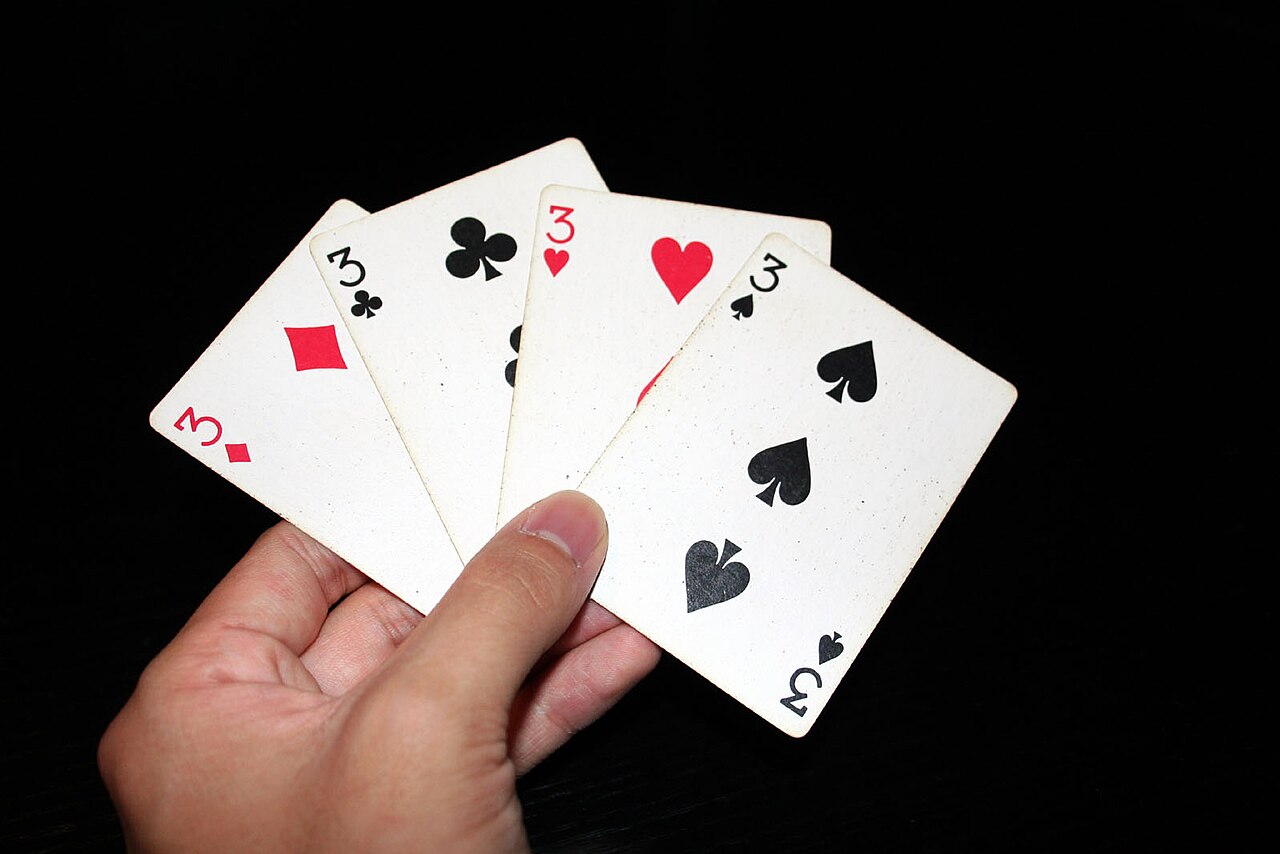
Every card game in the rummy family traces its ancestry back to a single, elegant mechanical premise: organizing a chaotic hand into orderly combinations before your opponent does the same. Despite that shared foundation, rummy is far from a monolithic game. As the core concept migrated across borders and oceans over the past two centuries, regional card cultures stripped away old constraints and bolted on new ones.
Today, rummy encompasses everything from high-speed two-player American parlor games to four-player South American partnership marathons and high-stakes Indian table contests. While casual players often assume that knowing one version makes them proficient in all of them, the reality is that each variation features distinct mathematical hurdles, risk thresholds, and discard psychologies. Mastering the global landscape of rummy requires looking past the surface similarities and dissecting the distinct rules and tactical frameworks that define each game.
The Universal Mechanics of the Rummy Family
Before examining the regional branches, it helps to isolate the mechanical DNA that binds the family together. In almost every variant, the deck or decks are dealt out, an initial card is flipped to form a discard pile, and the remaining stack becomes the draw pile.
Turns proceed in a three-step cadence:
-
The Draw: Taking the unknown top card from the stock or claiming the exposed card from the discard pile.
-
The Meld: Combining cards into valid arrangements. These consist of sets (three or four cards of matching rank across different suits) or runs (consecutive cards within the same suit, also known as sequences).
-
The Discard: Releasing a single card back onto the table to conclude the turn and preserve hand size.
The tension across all rummy formats emerges from an information dilemma. Drawing from the discard pile gives you a known asset, but it reveals your hand construction to every player at the table. Drawing blind from the draw pile preserves your anonymity, but it exposes you to the raw probabilities of the deck.
Winning any rummy variant depends on managing your deadwood—unmatched cards that carry point penalties if an opponent goes out before you do. How you balance the pursuit of high-value combinations against the defensive imperative of dumping liabilities determines whether you win or bleed chips over time.
Gin Rummy: The Fast-Paced American Classic
Created in New York in the early twentieth century as an accelerated alternative to traditional standard rummy, Gin Rummy remains the undisputed king of two-player card competition in North America.
Core Rules and Scoring Dynamics
Gin Rummy is played with a standard 52-card deck between two players, each receiving ten cards. Face cards count as 10 points, aces count as 1, and numbered cards carry their pip value.
Unlike games where players lay down melds progressively across multiple turns, Gin Rummy requires players to hold their combinations in hand until the round concludes. A round ends through one of two actions:
-
Knocking: A player may conclude the hand if their unmatched deadwood total is 10 points or fewer. They lay down their melds, separate their deadwood, and challenge the opponent.
-
Going Gin: Achieving zero deadwood across all ten cards. Going Gin earns a 25-point bonus plus the full value of the opponent’s unmatched cards.
The primary defensive mechanic in Gin Rummy is the layoff. When a player knocks without going Gin, the defending player has the right to attach their own deadwood cards onto the knocker’s completed melds. If the defender successfully reduces their deadwood to equal or less than the knocker’s remaining count, they score an undercut. An undercut awards the defender a 25-point penalty bonus in addition to the difference in deadwood values, turning an aggressive knock into a devastating financial reversal.
Tactical Play in Gin Rummy
Success in Gin Rummy hinges on timing your knock and managing multi-way draws.
-
Dumping High Deadwood Early: In the opening three rounds, ditch unmatched face cards and tens. Holding an unmelded king or queen carries an unacceptable point burden if your opponent engineers a fast knock.
-
Cultivating Two-Way Cards: Experienced players prioritize combinations that can resolve in multiple directions. A holding of 7-8 of spades alongside an 8 of hearts creates simultaneous opportunities for a run (6 or 9 of spades) or a set (an 8 of diamonds or clubs). These triangle holdings maximize draw efficiency.
-
Navigating the Knock vs. Gin Dilemma: If you hold 7 points of deadwood on turn four, knocking immediately is mathematically superior to fishing for Gin. You catch the opponent with unorganized hands and heavy point penalties. Conversely, if the discard pile indicates the deck is past its midpoint, knocking with 8 to 10 points is reckless, as your opponent has had ample time to assemble melds and will likely undercut you.
Indian Rummy: High-Stakes Sequence Building
Deeply embedded in Indian social life and flourishing across modern digital platforms, Indian Rummy (frequently played as 13-Card Rummy) is an expansive, mathematical contest played with two to six participants.
The Structure of the 13-Card Deal
Indian Rummy typically uses two standard 52-card decks, including printed jokers, along with a cut joker selected randomly from the deck after the deal. The selected rank becomes an additional wild card across all four suits.
To declare a valid hand, a player must arrange their 13 cards into valid sets and sequences, governed by two strict requirements:
-
The Pure Sequence: The player must form at least one sequence of three or more consecutive cards in the same suit without using any jokers or wild cards. Without a pure sequence, the entire hand is invalid, and all 13 cards count as full penalty deadwood.
-
The Secondary Sequence: A second sequence of at least three cards is mandatory. This second run can be pure, or it can incorporate wild cards and jokers to bridge gaps.
Once these two sequence conditions are met, the remaining cards can be distributed into additional sequences or sets. The scoring system assigns penalty points for unmatched cards up to a hard cap of 80 points per deal. Face cards and aces carry 10 penalty points each.
Tactics for Indian Rummy
The presence of wild jokers creates a deceptive sense of security. Because jokers are common, amateur players waste early turns trying to build sets around wild cards, neglecting the structural rules.
-
Securing the Pure Sequence First: Never spend turns building three-of-a-kind sets or using jokers until your pure sequence is locked. If an opponent declares while you hold three jokers but no pure run, those jokers are legally worthless, and you take a crippling 80-point penalty.
-
Calculated Use of the “Drop”: Indian Rummy allows players to fold their hand before playing a card (an initial drop, usually penalizing 20 points) or fold midway through the round (a middle drop, penalizing 40 points). Knowing when your hand is mathematically unsalvageable and choosing an early drop preserves your stack and forms the backbone of long-term tournament survival.
-
Discard Baiting: If you hold the 7 and 9 of diamonds and need the 8, discarding an 8 of a different suit or a 6 of diamonds can convince the player to your right that the mid-range diamond run is safe to drop.
Conquian: The Ancestral Blueprint
Originating in Mexico in the mid-nineteenth century, Conquian is widely acknowledged by game historians as the direct ancestor of the entire rummy genre. Its name derives from the Spanish phrase con quién (“with whom”), and its mechanics reflect a stripped-down, unforgiving design.
Rules of the 40-Card Engine
Conquian is played between two players using a traditional 40-card Spanish pack or a standard deck with all 8s, 9s, and 10s removed. The 7 connects directly to the Jack.
Each player is dealt ten cards, but the objective is to be the first to meld exactly eleven cards. This means the winning player must legally incorporate a card from the table directly into their hand layout.
Conquian diverges radically from modern American rummy in its discard mechanics:
-
Cards drawn from the stockpile are never taken into the player’s private hand. They must be melded immediately with cards already in hand or discarded onto the table.
-
The opponent has the right to force-feed cards. If a discarded card can fit into your existing face-up melds without invalidating them, your opponent can compel you to accept that card and make a corresponding discard. This mechanic, known as the forcing play, can trap an active hand into rigid, unplayable layouts.
Conquian Tactics
Because drawn cards cannot be hidden in your hand, Conquian is a game of open-table calculation.
-
Resisting Premature Melds: Laying down sets early gives your opponent complete visibility into your board state, allowing them to weaponize the forcing rule against you. Keep cards concealed until you have enough combinations to push directly toward the eleven-card threshold.
-
Tracking Suit Density: With 8s, 9s, and 10s removed, suit sequences skip from the 7 to the court cards. This shortens the total length of viable runs and drastically increases the frequency of duplicate-rank sets.
Canasta: The Art of the Shared Discard Pack
Developed in Uruguay in the late 1930s before sweeping through Argentina and the United States, Canasta expanded rummy into an intricate four-player partnership game that prizes bankroll endurance over quick finishes.
Melds, Wilds, and the Seven-Card Target
Canasta uses two decks with four jokers, totaling 108 cards. Jokers and all 2s act as wild cards. Unlike standard rummy games where a three-card combination completes a meld, Canasta demands scale:
-
Canastas: The ultimate objective is to construct melds of seven cards of the same rank. A natural canasta contains seven natural cards with zero wild cards, worth 500 bonus points. A mixed canasta contains four to six natural cards supplemented by up to three wild cards, worth 300 bonus points.
-
The Frozen Discard Pile: The discard pile is not a single card; it is a collective, stacking jackpot. Players can pick up the entire discard pile, but only under strict conditions. If the pile contains a wild card or a red three, it is considered frozen. Unfreezing and taking the pile requires holding two natural cards of the exact rank of the top discard.
-
Going Out: A partnership cannot declare the hand finished until they have completed at least one full seven-card canasta.
Partnership Strategy in Canasta
Canasta is fundamentally an economy of card control. The team that commands the discard pack controls the round.
-
Discard Pile Denial: Allowing the opposing team to pick up a stack of twenty cards gives them the raw material to build multiple canastas in a single turn. Defending against this requires maintaining a safe discard list—throwing black threes, which block the next player, or deliberately sacrificing a wild card to freeze the pile and increase the difficulty for the opposition.
-
Preserving Natural Integrity: While using 2s and jokers speeds up the completion of a canasta, overusing them caps your scoring ceiling. Top partnerships protect their natural runs whenever possible to harvest the 500-point natural bonus, deploying wilds primarily to secure base counts or unfreeze critical piles.
Universal Tactical Principles for Any Table
While each variant carries its own statutory requirements, high-level rummy performance relies on a consistent set of psychological and statistical habits.
Reverse-Engineering the Opponent’s Hand
Whenever an opponent picks up an exposed card from the discard pile, they are handing you intelligence. If a player draws the 6 of hearts, you immediately eliminate the possibility of that 6 being deadwood.
More importantly, look at the cards adjacent to that selection. If they pull the 6 of hearts, you should treat the 4, 5, 7, and 8 of hearts—as well as 6s of all other suits—as lethal discards. Track what they ignore just as closely. If they pass on a 9 of clubs, you know that entire quadrant of the deck is likely dead to their hand.
Discard Hygiene and Dead Card Tracking
Amateur players choose discards based solely on what hurts their own hand the least. Advanced players choose discards based on what gives their opponents the lowest mathematical utility.
A card is completely safe if:
-
Three cards of that identical rank have already been melded or discarded.
-
The connecting cards required for a run have already appeared on the table, rendering a sequence structurally impossible.
When forced to discard an unverified card, discard higher ranks earlier in the game when opponents are still organizing basic structures, and transition to strict duplicate-tracking as the deck thins.
Calculating Outs and Draw Efficiency
Card odds in rummy boil down to open-ended runs versus closed sets:
-
An open-ended run (such as holding 8-9 suited) has two immediate outs on either end (the 7 and the 10 of that suit).
-
An inside sequence draw (such as holding 7-9 suited) has only one out (the four remaining 8s).
-
A pair looking for a three-of-a-kind set has two outs (the two remaining cards of that rank across the other suits).
Holding open-ended sequences provides twice the mathematical probability of improving your hand on any given draw compared to chasing inside runs. Dedicating hand space to low-probability inside draws is the fastest way to stall your momentum.
Adapting to the Game in Front of You
The enduring appeal of rummy lies in its adaptability. A player trained strictly on the fast, aggressive knocks of Gin Rummy will find themselves completely out of their depth in the deliberate, defensive trench warfare of 13-Card Indian Rummy, where folding early is an art form. Similarly, those accustomed to the open-table tactics of Conquian will find the hidden-hand accounting of Canasta a completely different analytical exercise.
Success across the rummy family is not about memorizing a rigid script. It is about understanding the structural demands of the variant you are playing, respecting the penalty weight of your deadwood, and paying closer attention to the cards leaving the table than the ones resting in your hand.
